Saturday, April 16, 2011

Out-of-Sync: The Paradoxes of Time

Just read about this exhibition in Luxembourg from an email I received from E-Flux. Sounds pretty cool! There's a pretty good list of artists to research if you're looking for inspiration.


Artists
Manon de Boer, David Claerbout,
Tony Conrad, Valie Export,
Dan Graham, David Lamelas,
Marco Godinho, Laurent Montaron,
Bruce Nauman, Anri Sala, Hiroshi Sugimoto

Show description:
The Out-of-Sync exhibition broaches the sweeping issue of the place taken up by the dimension of time in the visual arts from a specific angle: it is concerned with works in which several temporalities coexist, overlap, contradict one another, thus developing a paradoxical relationship to time. Through this interest in what the philosopher Elie During, in his recent book Faux Raccords, calls "times out-of-tune" ["les temps désaccordés"], the works brought together in the show are not meant to illustrate or define the notion of time. On the contrary, they offer us an experience of its elusive nature.

The time-related figures of non-synchrony, disjunction and delay play a significant part in works produced in the late 1960s and early 1970s. Their development went hand-in-hand with the rise of the moving image in the visual arts, marked by the emergence of video and the growing use of film by artists, together with the busy dialogue struck up between the various art disciplines, focusing in particular on questions of time and process. The Out-of-Sync exhibition brings together a series of key works from that period, linked, dialogue-like, with more recent works illustrating the topicality of this question in contemporary artistic practices.

The matter of recording is central to the show. By way of straightforward techniques, the works on view in Out-of-Sync highlight the way the recording of time and its recreation may give rise to unconventional temporal forms. The installation Present Continuous Past(s) (1974) by Dan Graham is emblematic of this approach: using a video system which retransmits a picture of the exhibition area with a lapse of a few seconds, it offers us a perception of an "extended present time". A similar time-frame is conjured up by Laurent Montaron's Melancholia (2005): taking the form of a Space-Echo a musical analogue device designed to produce echo and reverberation effects displayed like a bas-relief in a pierced niche at the base of a wall, the work presents our eye with the ever-changing loops produced by its magnetic tape.

Another important aspect of the exhibition, underscored by the title Out-of-Sync indicating a discrepancy or lapse between sound and image is the place taken up in it by the sonic and musical fields. Bruce Nauman and Dan Graham have regularly compared the dimension of time in their early works with the musical output of composers like Steve Reich, whose "phasing" technique, based on the superposition of several identical lines of sound played at slightly differing speeds, foreshadows the use of a time delay in pieces like Bruce Nauman's Lip Sync (1969). This interest in complex forms of time possibly suggested by the musical fields occurs, in particular, in the activities of Manon de Boer, several of whose films take as their point of departure musical works such as John Cage's 4'33" and Béla Bartók's Sonata for Solo Violin Sz. 117, as well as in works by Anri Sala, whose video diptych After Three Minutes (2007) plays with the clash between the beat of a cymbal lit by a stroboscopic light and the frequencies peculiar to video recording.

Thursday, April 14, 2011

Gary Hill Documentary

The documentary began by introducing a very interesting concept of the artist Gary Hill: the belief that video an image-less medium, and simply a method of thinking out-loud. This becomes incredibly evident in his work as the viewer is often unable to comprehend his imagery because of the short amount of time that the audience is given in perceiving context. The image is also often neutralized by other elements like dull uniform colors and scenes lacking much depth or detail. Outside elements affecting the understanding of the image include alternating frame lengths that seem to compound and then slow. The most influential piece of his was the division of the separate camera views based on the concentration on the various parts of his body. Though he cited it as not far unlike a crucifixion, it was arranges more like a deformation of the subject or perspective. The piece depicting the "panorama" of the body was similar in its effort to use not only composition of the completed form: the screens, but also evidences of time to mimic symmetry. Later, he seems to carry this idea of miscomprehension into his use of language in his films, or even the development of language without meaning. There is a development of doubt in the image: subjects may often appear realistic but are still quite anonymous; which appears to serve as a way for the viewer to focus on their own tangible sense of time and space.

Gary Hill documentary

One of my favorite pieces from the Gary Hill documentary was Meditation, the one in which there is narration, a stereo, a hand, and sand. The materials he used in the video were quite simple. An aerial view is used throughout the entire video and their was probably no editing done to the video portion of the piece. The language Hill uses is also very simple. I liked how the piece had different stages of comprehension, in the beginning and then again at the end. The narration seemed to correlate with the actions of the hands. As more sand was added, the more the sound was altered and was taken to a new "place." As well as the sound, the sand itself physically moved by the action of the voice, and there was an interaction between how one action changed the other action. By the end, the voice is seems like it is buried because of the amount of sand that has been added to the speaker.

I found most of Gary Hill's pieces to be engaging, all having to do with his combination of language and image - however the one piece most people probably won't like (Incidence of Catastrophe) - is definitely the least accessible piece. Because the language is nonsensical is it harder to draw meaning, as well as the very strange (in my opinion) images in the video.

Gary Hill Documentary

The language that I received through Gary Hill's Documentary occurred to me on 3 levels. An emotional level where his works created a mood or theme, a visual level where the actions of the works effected my view, and the actual verbal language which effected how I heard the piece and interpreted it.

I found that in the pieces where he established a language or inverted our natural language, there was a point where I found it to be natural in that flaws and literacy were part of the learning process. I found it interesting to hear the girl struggle through higher level books because each word that was mispronounced or sounded out seemed to take on it's own persona. I started to go over the meaning of the original word and recreate a meaning for this mutation of the language.

I did not enjoy his nonsense piece because I found conflict between the imagery and what was occurring verbally. I did not understand why he had chosen to act as if he was incapacitated to create this scene and I wish it could be revised in a more appropriate manner.

I liked how in some of his pieces he assigned a syllable or word to an image or a cease in time. For example, in the piece where he slammed against the wall and said a word each time he did so, it interpreted to me as the struggles to create the perfect sentence and to carefully choose your words without wasting time and breath. It gave me good insight to the difficulties in the physical and mental articulation of a sentence, particularly in youth where language and grammar are just comprehended.

I enjoyed the pieces that conveyed motion and time. The piece that showed simultaneous pictures in a sequence was interesting because I had never quite noticed that quantity seems to slow down the cadence of time. I also felt that there is rhythm and almost like a beat to his works that involved time. One thing that was of interest to me is the ephemeral side of an image. In the simultaneous video piece, I felt that each moment was a snippet of information and wouldn't occur the same twice, so I watched intently.

Overall, I enjoyed Gary Hill's attention to the moment and the mutation or articulation of language.

Gary Hill Documentary

Gary Hill's documentary helped inform and inspire my work in video, which is a new and strange medium for me. I really contemplated his statement about video being of a reflexive nature, like a seance, and a circuit that allows you to think out loud. He exclaimed that, in his work at least, that video is not sound, not light, not image, but of some new kind of texture.

In several of his works Hill worked with strobe lights which I actually found particularly hard to watch at times. He also uses himself as an interactive part and language. The strobe light seemed to help capture the similar rhythm of the language and the movement applied. The language is often used but often very obscured, which seemed to be consistent in the overall context of all the work in the documentary.

I found Hill's interest to be mostly involved with behavior and to obligate the viewer to have to think by involving and playing very complex ideas and metaphors. I really enjoyed his ideas of comprehension and perception, and I believe that Gary Hill does a excellent job of exploring and conveying the mysterious, the unconscious, and "the edge".

Gary Hill Documentary

I really enjoyed this documentary and his work for the most part. The way in which he utilizes language to create double meanings and rhythmic tones in his work is really interesting both aesthetically and conceptually. I really enjoyed the first video that was shown for the reason that a rhythm was created by the reverberations of his voice which was creating an almost frantic mood in the piece. The way in which he explained it also made the video much more engaging in my opinion; he said that in creating this video he wanted “not sound, not light, not image but a new kind of texture.” Another one that I found particularly engaging was the one in which five frames were placed next to each other on the wall; each frame was playing for an equal amount of time but the flipping between the screens made time lapse in a rhythmic fashion, where even the noise within the piece became mesmerizing. The space in which this piece was placed made it mesmerizing as was the lapsed experience of time. My favorite piece of his is Mediations. I think the integration of sound and image being controlled by his voice is beautiful. The reverberations of sound seen through the sand is such a strong image that speaks to his use of language in his work.

Gary Hill Documentary

Overall, I found his work to be very interesting with the exploration of language and speech. My favorite piece was when he juxtaposed different images for 1 frame and how they morphed the viewer's perception of time. I also found his use of multiple screens and having them interact create a whole new experience than all on a single screen. As for his studio space, I found it strange that he likes working in a bunker like condition with no windows or sound. I couldn't imagine working like that. I would lose track of the days and time, yet maybe that is how he can work so productively by not having outside stimuli mess with his sleep/living patterns.

Documentary

Gary Hill's film made me think about the different ways that effects can be utilized in a film. Experimenting with lights in my first project I especially enjoyed how the strobe light was used in his film. How the camera captured light against that black wall, the entire room was illuminated with every flash. Another part I really enjoyed was the contrast of the book turning with the waves in the ocean. The composition was beautiful, and the transitions between the scenes were flawless. Also, the sound created when the film was slowed down and reversed was really cool and eerie, something I might want to use in my final project.

Wednesday, April 13, 2011

Gary Hill Documentary

I thought that many of the ideas that Gary Hill's videos dealt with were very interesting. I found the concept of language and its relationship to how we observe time very neat. I was really intrigued by his videos where the words and actions were recorded being done backwards and were played to look like they were moving forwards.
I was also very interested in his video using single frame editing. I thought that the video that technique created was very beautiful and almost haunting. I thought this particular video really made me think about time and the passage of time. As the frames changed farther apart time seemed to slow down significantly and when they were closer it seemed to speed up. The single frame editing also reminded me of old film reels and how at some points the different frames could be seen. This added to the dark, old, haunting feeling of the video.

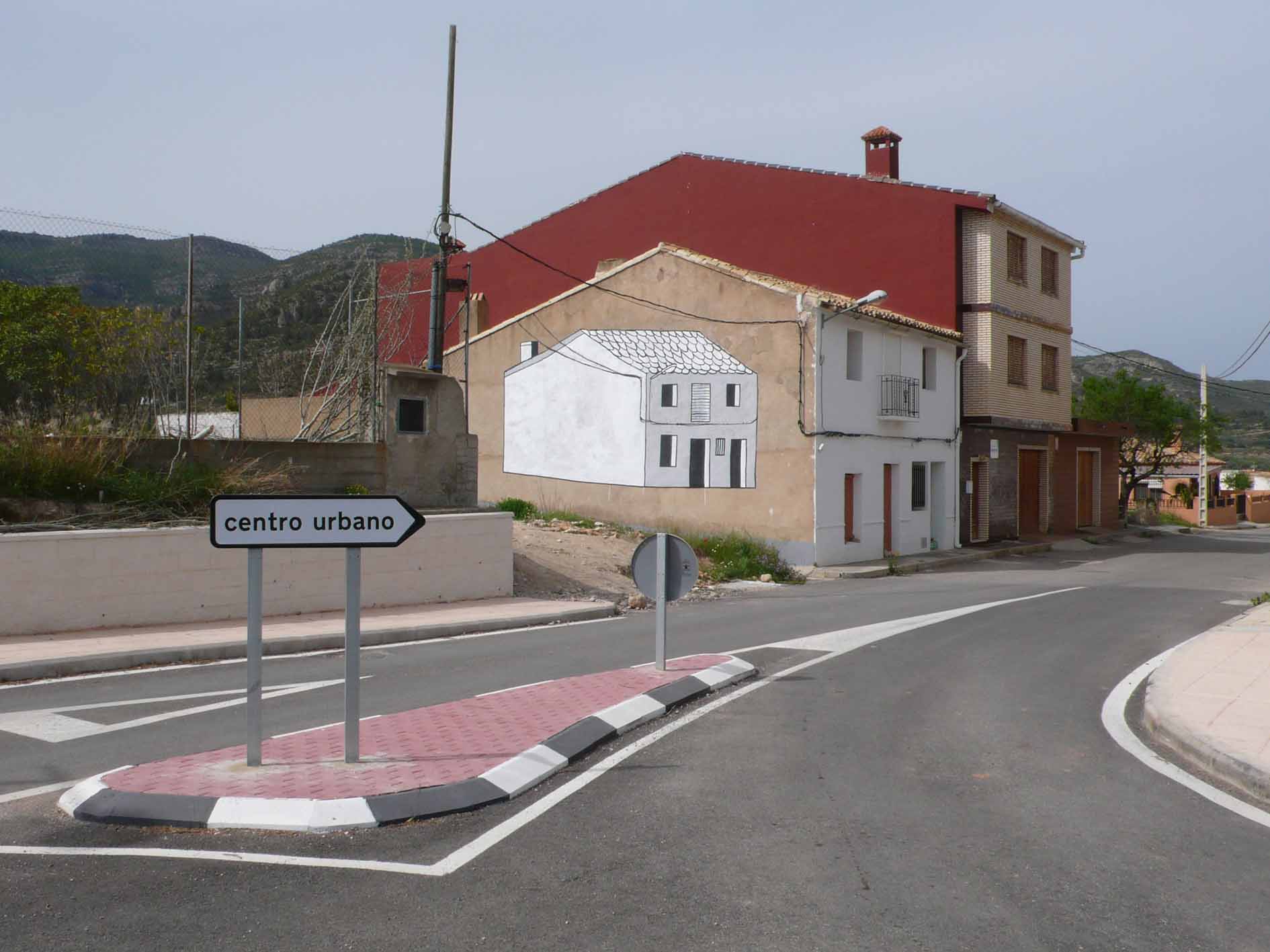
Houses on houses

Heather - this made me think about your final project idea.


Here's a link to the article. They have a link to more of the artist's work.

Tuesday, April 12, 2011

Gary Hill Documentary Response

Gary Hill had an interesting philosophy towards his work and the art that he created. I like his strobe light project with the wall and saying phrases. He creates a materiality feeling with the flashes of light. It sort of brings them to life. He also makes a physical connection between body and the wall. In a sense, the language is 'illuminated' when the strobe light flashed. Some of his other projects were a little out there and I didn't like them that much. I wasn't a fan of the nonsense themed projects. I didn't feel the bathroom floor and nude setting was appropriate for the concept in my opinion. I did appreciate that he took time for himself and went surfing. It turned out to be inspiring to him, which I liked.

Pixel Video

I came across this video and I thought it was really interesting. I enjoy the graphics and how they pixelate the world. Enjoy!

Thursday, April 7, 2011

Knife and Chair Post

In each of these videos, there is conveyed a certain emotion or vibe. For example, in the knife video, as the light changes and passes from a red hue to a greenish blue one, the mood of the picture turns from one of a cooled sense of content or relaxation to a sense of tension or suspense when the red is introduced. The mood in the chair piece is one of a weightless nature. As the feathers are falling, there is the feeling of weightlessness in the feathers an then a feeling of solidity in the chair. As the video continues, there is a sense of overwhelming as the feathers collect. I believe each piece showed an interesting emotion, whether we choose to recognize it or not. Also, I feel as if the chair is experiencing a moment in time that is unique or part of a spectacle, since it is not usual that feathers are falling from the sky. In this way, I believe the chair plays a characteristic role and the people are acting around it. I enjoyed these two videos...

The Chair & The Knife

Both videos were shot in similar ways. They shot the object in a straight on angle with limited camera techniques. the objects are being affected in some way yet are not moving. In the Chair, the multi-colored feathers are lightly falling on the chair creating a myriad of colors in the colorless chair. The viewers are merely watching the action happening and not actually involved in it in any way. The knife is similar where it is being affected by the light. The light is so vibrant and poignant reflecting off the metal. It is really interesting to see the light creep on the knife in an almost menacing way. These videos are good examples of limited space in order to depict movement and action.

time as medium

I really enjoyed reading this article because it combines science and art, especially video art. This article, for me explains what the title of class really means. The introduction into modernist art and the need for artists to find their own unique perspective and exploring it demonstrates that video art has followed that path and has become something entirely on its own. The ability to construct space through time is something I understood after reading Bruce Nauman's Corridor Installation, and Einstein's time-space system made me think about film scientifically.

Time as Medium

The thought of a psychological existence instead of a physical material being used as a medium for art is a truly intriguing concept/practice.  I thought a particularly interesting piece was Dan Graham's Present Continuous Past(s).    His ability to show you past/present/future while questioning reality is an increadable skill and thought conveyed.  I thought this was a good article to introduce the constructed space project.

the knife and the chair

The knife immediately opens with a knife and stays with that composition for a while. I started thinking that the artist wanted me to use the knife to kill someone or have violent thoughts with it, weird. By adding the colored light it reassured that thought. I wasn't too intrigued with either of the films especially the chair. I think this piece failed to make what ever subject or concept they wanted to share interesting. It was centered and static, maybe if it was shot at a more ambiguous angle then it would add some level of interest.

The Knife & The Chair

In the first video, the knife, the camera has a nearly direct view of a single knife on a blue background which periodically reflects different color lights. 

The second video, the chair, was a simple head on shot of a chair which has pieces of different colored paper gracefully dropped upon it and the surrounding areas in the shot.

Both of these videos deal with a single ordinary object sitting in the center of the frame while different colors flow throughout the scene.  This boring and simple ritual left me generally uninterested and brought no thoughts or discussions to my mind.

Time as Medium Post

I thought that this article was particularly interesting, given the chance to actually experience one of these pieces. The piece that I have experienced is Bruce Nauman's Corridor Installations in Dia: Beacon. In participating in these pieces, you get a sense of time in the present (as in what is happening around you or in the piece at the moment) and past (what has already occured). I really enjoyed the idea that the delay of video feed is past even though it is recording of just a few seconds beforehand. Also, I believe that the idea of an object viewing itself is interesting in that there is a sense of disbelief in the idea. If the object were able to think, would it see itself and believe that it was a copy of the image or that the image is an imposter or a copy of itself. I believe the object would question it's reality in relation to the image, but have a physical sense of self by being in existence. I think this questions the idea of reality versus cinematography, which we have previously discussed, which is why I found this interesting.

The Knife and The Chair

I found several similarities in these two works, but I favored The Knife more at first. Perhaps it's because I was less aware of what was actually taking place, and how the effects were actually being made were much intriguing than that of The Chair. Also, the knife itself was a more intriguing object at first viewing the video. The object in both works appeared to be suspended in a negative space, kind of floating. However, the feathers in The Chair made the object's figure ground relationship more able to establish.This led to more ideas of what the possible meanings behind the video were, and provoked stronger feeling which elevated to the same fondness I had for the Knife. I also liked the comparison of darkness with bright colors in both works. While both works came across as simply playful and experimental at first, I found them to be much more clever and curious the longer I watched.

Time as Medium

At first, I found "Time as Medium" to be pretty complicated and wasn't sure what to make of it. What brought the main point to focus for me was actually the most obvious, the title of the article. London begins the article by discussing Clement Greenberg's ideas on video as an art form and how he analyzes Modernism. He states that modernist artist must search and determine what aspect is unique to their discipline. Video artist in that sense are modernist because "They focused on the effects peculiar and exclusive to video", which apparently, and most certainly, are almost always related time.
London discusses several scientific elements dealing with time, but does point out that this isn't really the main concern for video artists in making their work. Still, one cannot ignore the fact that video has the strong capability of interchanging these scientific ideas more than any other art form. London gives examples of video art that make the viewer question the way we perceive time, suddenly causes the viewer to be more aware of the present, and causes the viewer to contemplate their on existence in time and space.

Time as Medium and the Jack Goldstein Films

Time as Medium
Barbara London begins her analysis of the critical theme of time in video art by solidifying the importance (or possibly the irrelevance) of its scientific understanding (or, misunderstanding). At the forefront of the scientific perspective is Einstein's Theory of Relativity, which finds that time is only meaningful relative to space, both of which are infinite when linked to one another. In my view, this statement follows the perception that for every possible action, there are several different reactions occurring in responsive spheres of time. Einstein also calls upon the existence of multiple spaces within a single space, which I felt supported William James' claim of the continuum of time being made out of merely smaller segments of time- individual moments that react to one another the way every piece of wood on a hanging bridge might react to each conscious step. Again, there is talk about the "now-ness" of video art and the opportunity of live or delayed feed to play on the viewer's meager understanding of time. Under the belief that "time is an illusion" Paik was able to convince his audience through his work, TV Buddha, that space can be isolated, thus breaking its link to time. The work is time-less. Above all, I appreciated the German phrase related to memory as it was introduced to illustrate the lack of understanding we have of the concept of time: "ist geschehen"/"is happened", suggesting a simultaneous pull and push between past and present.

The Knife
Goldstein's The Knife shifts the viewer through a continuum of emotions by influencing their association of the object to the color of the light projected on its reflective surface. It's almost magical, the simple play of the light on the knife and how it seems to grow from inside of it; this raises an interesting dialogue about the properties of reflection and light which directly references the medium of video, the final product being seen on the screen in this case. Though, it should be noted that the video will not be able to project the reflective property of the object, which results in this almost "magic-like" effect with the colored light. To elaborate, since it is inevitable that when we see the knife on the screen we have an innate belief that the knife is located in the present, we also assume that the rules of reflection still apply, which is not the case. Goldstein seems to play on this fallacy of thought.


The Chair
This work seemed to have a strong understanding on the visual play of background and foreground. The brightly colored feathers are able to cue the traces of the object within the space by falling behind, in front of, and on the chair. In this way, Goldstein is creating a unique focus on depth within the screen so that it almost feels live; the darkness encapsulates the viewer and the feathers float within arm's reach. The viewer does not question the scene, rather it becomes a meditative and visually embracing scene.

Time as Medium response

Although this article was hard to follow at times, I found the idea of video art's main medium, time, to be interesting. Rarely used as a medium in other areas of art, video art and especially video installations can reveal time to the viewer or the artist can make up and warp their own sense of time and impose it on to the viewer. I also found it interesting how artists such as Dan Graham also manipulate and create space along with time in his installation Present Continuous Past(s). I love how he plays with reflections along with presenting the participant with what is the past and what is the present. I believe the nature of video art is perfect for using the medium of time and space after reading this article.

Time as Medium response

I thought it was interesting to see how artists have different approaches to using time as a medium in video art. The article opens up by discussing Clement Greenberg's evaluation of Modernism requires "each discipline must search for and determine what is unique and irreducible to that art." In this way, video art using time as medium practices this Modernist viewpoint through the inherent qualities of video as a recorded representation of space and time - one that can be experienced both through the present and past.

I found Dan Graham's Present Continuous Past(s) reflective of this. Because of the placement of the monitor in the mirrored room, the piece forces the viewer to focus upon the actual space as opposed to their own image reflected. In the work, time is repeated again and again through the mirrors constant reflection and the viewer retains a heightened awareness of the space they are in.

Bill Viola's Decay Time was also interesting to me because of its reliance upon the viewers interaction and memory. By isolating a specific event and quick, Viola forces the viewer to rely upon or create their own perception of time and space.

Jack Goldstein Film response

In both of Jack Goldstein's The Knife and The Chair, the objects being filmed are mostly defined by the light, both blending into the background (the chair more so than the knife) constructing a contained space.

The Knife was interesting to me because it reminded me of those horrible loading bars on flash websites that lack immediacy. For me the light slowly being reflected on the knife created tension and a slow passage of time in space with no sense of depth. The instance when the "bluish" light started to reflect I had actually thought that there was no light being reflected because it blended in with the background really well. The knife remains static, light is the only thing that creates a passage of time.

The Chair functioned in a similar way, except for in this film The Chair was not given movement through light, but the light defined form. The chair appears really shiny, almost like its coated in tar or wet paint. Movement is seen through the accumulation of paper/feather like material falling upon it, demonstrating a passage of time in a seemingly boundless space lacking depth.

Goldsteins The Knife and The Chair Response

I felt that both pieces spoke to our upcoming project in that they were both situated in a very controlled space in which time was depicted by the movement within the frame. In The Knife time was conveyed by the light moving across the metallic surface of the knife; the continuous motion almost made time lapse back into itself as there is no other indication of time within the space constructed. In The Chair the passage of time was created by the falling feathers which is much like The Knife in that the repetitive motion almost made time stand still in the controlled space but the progression or build up of the feathers upon the chair and ground is a strong indicator of the time that has passed.

Wednesday, April 6, 2011

The Knife and The Chair

Overall, I did not care too much for these two pieces by Jack Goldstein. For The Knife, I thought it was cool how the knife changed colors so smoothly and reflected the colors so vibrantly. As for The Chair, the falling feathers seemed to take forever and I was expecting a lot to fall at the end of the piece in a giant heap. I did notice the feathers stick to the chair's surface at strange angles and almost became apart of the chair. Both of his pieces seem quite long but they also make the viewer aware of time and space, almost warping time. Due to the minimalistic and monotonous nature, it allows the viewer to do some self-reflection.

Jack Goldstein's Knife and Chair

In light of the reading and the new project coming up, I watched these two videos with the concept of time in mind. In both, the chair and knife are static objects. You do not really know how much time is passing. The video could be sped up slightly or slowed down. In The Knife, a light is shown onto the object, slowly overtaking its metallic surface (red, green, red, blue, yellow). Once the color fills the object, it stays there for a moment and then quickly retreats. The light is the only indication of something occurring within this obscure time frame. In The Chair, various colored feathers/leaves are dropped onto the scene (just a chair resting in the center of a room) at about 3 second increments. Once again, the object is passive. Forcing are being forced upon it, altering it in its physical appearance. I think that both of these pieces has something to do with time and space--how they interconnect--as well as the obscurity of time in such a scene (blocked off from natural light; uncertainty as to whether or not the video has been tampered with to make time move differently). Very nice, simple contemplative pieces.

Time as Medium

I enjoyed this reading. I am really interested in the concept of time and space--the discussion about Einstein's theory of relativity brought to mind Alan Lightman's novel Einstein's Dreams. In this book, Lightman describes a series of dreams that Einstein could have had while coming up with this theory. Each chapter describes a different world/city where time and space relate to each other differently (like in one world, everything is on wheels--buildings and all--so that they are constantly moving; in another world, time in non-linear; etc.). From this reading, I was really interested in Graham's Present Continuous Past(s). I like the idea of the present instant, and trying to capture that along with the past. As William James posed, "Where is it, this present." It is constantly turning into the past. Time is an all-encompassing factor on our lives that consumes our thoughts. It is interesting to consider it as an illusion; something in existence only because we created it.

Tuesday, April 5, 2011

Jack Goldstein's Video's

The first video, called The Knife, was a still shot of a silver knife with a dark blue background. The light source was from the light. Gradually colored light would appear across the knife and then quickly disappear. It does this several times with different colors (red, green, blue, yellow). I have been trying to contemplate the meaning behind this piece and can't really think of anything. I am guessing this is an example for our final project (constructed space). The mood I get from it is anxious. You get this slow build up and then you wait for it to quickly go away. The anticipation grows each scene.

The second video, called The Chair, is a still shot of a gold-sh colored chair, barely visible in the dark background and shadows. The light source is small and highlights the upper part of the chair. For 7 minutes, colored feathers slowly fall one or two at a time (almost 80 fall). The mood/message I get from this video is solemn and serene. The feathers could represent thoughts falling or possibly an ending to a day. I'm not quite sure though...

Time as Medium

This article explores a brief history about the use of video and time as a medium for art. I liked the concept of video recording what is seen on television and distorting in various ways, such as using a magnet to warp the images. Bruce Nauman's Corridor Installation is quite fascinating to me. The idea that you can't simultaneously view yourself on the screen is intelligent and must have been frustrating for the viewers. As I kept reading, I realized that most of the video's written about used some form of reflection, either through, mirrors, televisions. They also relied a lot on space for their projects to be successful. I think these two concepts are especially important. They are very thought provoking to the self and personal issues.

Time as Medium

This article on time was very confusing to me at first. It took e quite a while to wrap my head around the idea of time. Time is a concept that is always around us it was difficult for me to critically think about it. Because of this I found it very interesting that the author mentioned the debates about the sense of time and differing opinions on weather duration could be divided up, or it was a constant conciseness.
Thinking about video art in terms of time has become much easier for me since taking this class and I found the explanations of the art works the most helpful in illustrating the relationship between time and video. All the videos seemed to show a disconnect between vision and time. This seems to make sense because of the nature of visual arts and the nature of video art using time so heavily. All of the works, "Corridor Installation," "TV Buddha," "Present Continuous Past(s)," and "Decay Time," seemed to point out a disconnect between vision and time. They seem to make time become another sense. They also make a very strong case in having the viewer, or more correctly the participant, become aware of the now, the present moment.

Tuesday, March 29, 2011

Lydia Benglis - Now (1973)


Follow link to be taken to Video Data Bank's page on Now.

Joan Jonas - Vertical Roll (1972)

Richard Serra - Boomerang (1974)


As described in Krauss's Aesthetics of Narcissism.

Jonathan Horowitz

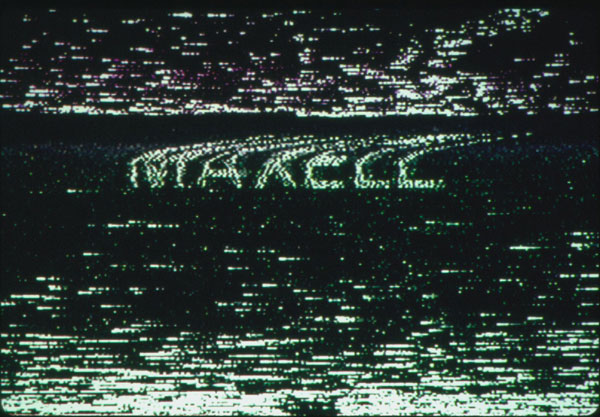
Maxell (1990)


Read about the piece here on Rhizome.org.

Krauss

I found this article to be dense and a bit wordy. But I was really interested in Lynda Benglis "Now" piece. I was intrigued by the way the artist layered herself in "Now" and perception of time and what "Now" was was irrelevant and indiscernible. Krauss talked about the different mediums and how video might be perceived as narcissistic. In most of these video performances the artist records himself/herself as if the recording apparatus is a mirror. He says that this act is psychological which is the basis and content of work, it is usually not regarded as the medium. Painting and sculpture are based on objectives and material. Video can transmit and record at the same time, producing feedback such as Holt's Boomerang piece. It is interesting that by hearing herself less than a second after of saying something, it distracts her and begins changing her perception of now.

The Aesthetics of Narcissism

I found this reading a bit hard to understand. I was initially confused as to the differences between video art and other art mediums, and the distinction between self-reflexive and self-encapsulating. I did find it interesting, however, the portion of the reading that talked about this relationship of self-encapsulation and spacial disclosure.
The idea of a continually renewed view of himself or herself. This seemed like the biggest gap between video art an other art forms such as painting; the artist, or subject, as a changing part of the art that is constantly responded to and is always manipulating the work. I found a lot of what the article was talking about to remind me of what little I know about performance art. I know a little about Vito Acconci's performance work and studied a bot on how photography was used as a medium to record his performances. At parts of the article it sounded like video was more about capturing the feelings with in a performative work or expression the narcissistic ideas of doing a performance work.

"The Aesthetics of Narcissism"

   After reading is deep passage by Krauss, I was initially most drawn to the section about the video Now Lynda Benglis. The repetition of the word "now" posses the question of confusion because we don't know who is speaking or where it is coming from. I like this because it creates a sense of abstraction and curiosity is formulated. I had actually been interested in doing some type of project with these concepts some time in the future... combining abstraction and curiosity with nature (or something...). I also like the juxtaposition of the two separate projections that were displayed. It created an even deeper sense of confusion for the viewers.

   Krauss emphasizes the concept of narcissism being portrayed in modern day video art. An analogy is made between video art and a mirror because they provide instant feedback from the artist to the viewers. I also like the metaphor of painting that was used in that in a psychological state is create to "paint" on the film. Towards the end of the reading, Krauss talks about Campus' video Vertical Roll. She makes a reference to this triangular relationship that is created between the camera, the projection device and the wall. The other figure is himself and he comes in and out of the frame. I feel that many video artists use self-portraits in their video art and Campus' video is an ideal example. He spotlights himself in various different ways.

Tough reading assignment, as I'm sure you are aware :)

The Aesthetics of Narcissism: Krauss Reading

I agree with Krauss that video is a medium of narcissism, while not necessarily singularly encompassing the medium. To me this was the most important and most obvious issue that Krauss takes on. Krauss brings me to terms with this conclusion by discussing whether the medium of video is mainly physical or psychological.

He discusses that it is difficult for some to accept this idea of video being narcissism perhaps because video requires certain physical mechanisms. However, the illusion that video can depict to the viewer represents and presents a different notion of an "extraordinary image of distraction". Krauss explains that artists achieve this with video through the simultaneous reception and projection of an image and the human psyche used as a conduit. He continues this discussion by explaining that use of these two features in video causes the present to appear to collapse onto itself because it is replaced simultaneously by itself and is instantly made into past history. This causes one to question present, past, and time in general. Whether the artist uses mirrors to view or audio, Krauss describes that the play with history is created with the use of text to tie one moment to the previous one.

Krauss exclaims that many compare this reflective mode or process to the way an artist would use a reflexive process with a different medium discourse. However, he describes reflective to be different than reflective instead of reflective simply being a variation of reflexive because reflective mode deals with radical symmetry and reflexive deals with radical symmetry. He describes the reflective mode, unlike the reflexive, implies the "vanquishing of separating" of subject and object. This fusion of subject and object actually diffuses the object, which Krauss describes as the electronic equipment and its capabilities, and enforces the notion of video being narcissism and not about its physical aspects.

Krauss: The Aesthetics of Narcissism

Krauss' Aesthetics of Narcissism is a rather difficult read. Even after going back through it multiple times, I'm still trying to wrap my mind around what exactly Krauss is trying to detail—and on top of that, my opinion on it. One of the important differentiations Krauss makes early on is the difference between film and video, which sets a precedent for the rest of the article. What is curious to me, on top of that, is that Krauss procedes to talk of the medium of video (which she details as narcissism)—but in my mind, video, most like film, but also like sculpture, painting or ceramics, is a physical medium in which to work. There doesn't seem to be a medium of video. Krauss acknowledges this, saying that it would be simplest to leave the discussion at that, and I think that is rightly so.
It's true also, as Krauss says, that there are psychological mediums. But I think they are different than physical mediums. You can be working in a mindset of narcissism as easily as you could work in a mindset—or want to explore the concept of the psychological state of—happiness. Krauss argues in the essay otherwise, and presents some interesting and compelling examples of narcissistic topics in video art—such as the Boomerang collaborations between Richard Serra and Nancy Holt, but one could just as easily create a concept that involves no human interaction in video. Serra's and Holt's collaboration seems like it would turn out similarly if it were filmed and recorded instead of taped.
So, ultimately, I think that just as the painter chooses to dip their brush in acrylic rather than oil, or the designer chooses to use a computer over a pen and straightedge, the artist working in the visual medium of film or video (or digital video, or harddrive based video) is choosing a tool and a mechanism. From there they can explore whatever concept or psychological medium they would like. Video, though, can be created outside the psychological medium of narcissism's limitations.

The aesthetics of narcissism

Strangely enough, I did not have much difficulty reading the first half of the article, but by the end I was just like "What happened?" Aside from Krauss's less than accessible word choice, I found the article brought up great points about narcissism and how it functions in both video art as well as other forms of visual art. I find myself drawing similarities in how narcissism functions similarly in video art, to Serra's Boomerang in which like Holt is contained to a reality of self, video art is also encapsulated in self because of the mediums inherentness to be connected to self. One aspect of the reading I really liked was Krauss's distinction between reflection and reflexiveness. Reflexiveness still maintains a separation between the object and subject. Reflection is about the fusion of subject and object and how the differences can be resolved through appropriation. Reflection being in video art seems much more narcissistic because it is about the "self" while Reflexiveness in other forms of art is not about the self. One aspect I do have trouble with in this article though, is that I do know their are paintings about self and video art not about self. Why did Krauss not address this more aggressively? I know I'll have to go back and read this a few thousand more times to really get what Krauss is saying, but I miss a little bit of counterargument that could strengthen his argument more. Or maybe if he plainly states what exactly he/she is chasing in the article, what the goal is. However, what I gathered from this reading is how narcissism functions in some types of video art. For me I think narcissism is common in video art because of the performative approach many video artists take. Humans are also inherently always going to be fascinated with themselves as well, which also lends itself to narcissism.
When first approaching this article I enjoyed how krauss paralleled painting to movie making. Incorporating the elements of painting like what composition does to the human psyche and applying that to movies is an interesting idea. I interpreted Serra's film "Boomerang" as more of a psychological experiment of distraction. I also really liked reading about the mirror effect on the psychology of humans. In film both the human and the audience is the medium, the author referred to the mirror effect as narcissistic and I think that is a bit extreme. When given a script and a different setting I think that mirror is lost.

The Aesthetics of Narcissism Response

I found this reading somewhat difficult to really get in to however, I thought that Krauss had some really interesting points. He says that video has the ability to be a simultaneous reception and projection of an image; this medium in which the past and present stand side by side is set apart from other physical art forms which exist in or represent one place and time. Some of the video projects mentioned that I found particulary engaging were Boomerange, Air Time and Now.

In Boomerang, the mirroring of Holts voice and her spoken thoughts that overlap and confuse each other as they are also confusing the participant and audience creates a situation in which the past and present are almost intertwining but in a way that appears forced. In a way this makes me think of the scramble of thoughts in my own head when I become really stressed or have a lot to think about: nothing is organized and as thoughts build confusion erupts and you lose sight of what you were trying to concentrate upon. The symbol of a boomerang to represent her ideas returning back to her is really effective for this piece as well. Air Time and Now function in a similar manner as Boomerang, but in a more visibly understood manner. ByAcconci talking to the image of himself he is able to reflect upon his own self, much like Holt is reflecting upon the playback of what she had previously said and Benglis’ video of her body working side by side with her body in the past also references this merging of the past and present into one time frame in which they become able to coexist.. The use of the word now within the video is a more direct relation to Boomerang in that the audio is relapsing upon itself, almost creating a musical rhythm of sorts. I especially liked how they referred to this overlapping of audio in saying that all layers of the now are equally present and the individual has no past and no connection to objects that are external to it.

Krauss’ emphasis on narcissism within these and the other video works mentioned makes sense in that as video artists are learning to explore the medium as well as their relation to it they focus upon their relationship with the medium. I think that is present in almost any art form though. Most artists (working in all mediums) work with their bodies by creating self-portraits that are conceptually or literally a reflection of themselves. The only difference with other art forms is that the image takes on a different aesthetic when transformed into a medium such as painting, drawing or sculpture while video art is more representational of the actual human form and voice and thus more narcissistic. As art is largely an expression of ones self I have always understood such video art as reflective and exploratory more so than narcissistic.

Monday, March 28, 2011

The Aesthetics of Narcissism

Krauss argues in his opening statement that at the center of film lies the inevitable act of narcissism, and he bases this on the medium of the practice compared to those of other fine art. While other mediums may employ paint to simulate a psychological state, video art uses psychological states as a way to paint the canvas of the film. Indeed, the human body is the central element to a majority of film; and its relative immediacy helps to promote this and give film its sense of narcissism by allowing the viewer to look into what is essentially a "mirror". But given a script or some other choreographed element and the film loses that immediacy and makes the viewer consider what may have occurred before. The confusion between immediacy and what may have been pre-recorded is what gives film its unique nature. Not so many other mediums can interact with the viewer in such a way, almost conversationally. Krauss cites the play on such slight inconsistencies with real time through works like Boomerang, which caused the actor and the audience to become frustrated and even distracted by the audio never achieving full synchronization. Again, video functions very differently from other mediums in its ability to not only activate, but involve the viewer's psychological state. The popularity of film in art today is cited by Krauss as originating from its ability to disseminate through mass media quickly and efficiently; a false sense of verification through art. This explores the most immediate influence of narcissism in video art, and is remarkably what I chose to focus on in my own group's film of the five obstructions! This article was fantastic for exploring the human psyche in connection to video art and why it has always been deeply embedded in narcissism -not just in today's youtube era.

Vito Acconci's Centers

Tuesday, March 22, 2011

Five Obstructions Blog Post

I was very interested in this video. It challenges you to do things in filming that you wouldn't normally do and necessarily like to do. I believe that it also opens a new door into exploration. With the introduction of obstacles into filming and cinematography, I believe that you, in solving your problems, create a new perspective that is more interesting than what you would have planned previously. Some of the best works of artists are created through mistakes and serendipity. This was very inspiring to me and I can't wait to try my own five obstructions. I also believe that even though you may not like to be directed, it leaves the door open for criticism and revision to create a more accurate or narrowed down work. I was also intrigued by the obstructions and how he played around them. I would definitely love to explore things like this in the future.

Five Obstructions Response

I thought this was a really neat idea to further and extend a projects possibilities.  I enjoyed the constant clips from the original "Perfect Human" instead of just showing it all at the beginning.  I felt as though this allowed for an almost comparison of the original film to the creator, Jorgan Leth, as the film goes along.  This constant juxtaposition brings the viewer through the film smoothly.  The idea of different obstructions altering the approach and process of a project is a great tool to use in ideation and production.

The Five Obstructions Response

I thought the idea of the film and the way in which it was filmed was really interesting. Though it was almost too slow for me personally at some points, the idea of finding perfection and being the perfect man was almost comical in an intriguing way. Defining perfection is such a vague and practically impossible task but I think the way that the artist went about defining it for himself defined who he was as an individual. The angles and clips of interviews and events throughout the film brought about a very real life documentary type feel that was informative but also engaging beyond the sense of a documentary. Additionally, I really enjoyed the parts in which he was interacting with and trying to share ideas with the other artist, who did not always see things from the same point of view.

The Five Obstructions response

Recently, I have been imposing some of my own "rules / obstructions" in my own work in other class projects as a way to force myself into one idea to pursue and build upon. I don't know why I haven't thought about using it in Time Based Media, something I am so unfamiliar in working with, like everyone else in the class. I suppose every project in itself has obstructions, but the more I give myself or have, the less time I spend thinking about what to do and instead just make. What I found interesting about the film is right from the beginning you are watching Leth imposed with these restrictions and must react, create, and remake. He is not creating something new, but recreating something that has been made already and put on a pedestal. Making something again, with rules, I find is just as difficult as creating something quite open ended. One thing that did cross my mind during the film is why? Why is it necessary for Leth to recreate his film with another mans rules? A conclusion I reached was that the deliberately annoying and strange obstructions made by Trier made Leth give up his control over the creative process. This I find is the root of the obstructions - giving up control. In times of distress while making something, sometimes the best thing is give up control. The obstructions are really a veil that cover the simple idea that giving up control over your work can help you create work that may not necessarily be the best, but something to go off of. For me the film also put an emphasis on the creative process, as opposed to the final product. The film itself only shows clips of what Leth made and instead mostly shows Leth's reactions to the obstructions and how he solves them.

The Five Obstructions

"The Perfect Human has nothing, and thus no limits."

This film is an amazing, living psychoanalysis of the self-destructive human character. It follows one man's ambitious pursuit of perfection while battling the most difficult obstacle he could ever face: his own impossible expectations. At the beginning of the film it appears as if the man has been worn weary by his severity, and in order to battle a fit of depression a friend chose to impose a litany of obstructions on a previously seminal work of his. Though this appears counter-intuitive, the placed obstructions actually served as a distraction to the man's own obstructive behavior. By forcing the man to go places he had never willingly gone before out of the intention of not satisfying himself, but another man's criteria, the man was able to learn how to preserve his sense of identity throughout his work instead of sacrificing it for the sake of the work. At the final moment of letting go of his self-destructive behavior, the man learns that he was living up to not only the once-in-a-lifetime success of his most seminal film, but the message of it: to become the perfect human.

"This is how the perfect man falls."

Five Obstructions Film

Out of all the films and clips we have seen this semester, this was by far my favorite. I found Leth's film style/content to be really interesting--the idea of the perfect human. I love how he dealt with the obstructions and their contrast to the original film. His use of bold textures and colors in the "reboot" videos were beautiful--his Cuba film was particularly rich in these qualities. Out of all his videos, I loved the one in Brussels the most; it read like an experimental movie style to me. It particularly reminded me of the Brechtian theater model--the use of a narrator and characters that explain to the viewer what is happening and who they are. The scene where the woman roles down the window to talk into the camera was a Brecht-like move on Leth's part. This style directly calls attention to the audience's presence in the performance.

Overall, in terms of the content in relation to us, I like the idea of obstructions. Limitations on projects, while irritating at first, really help the creative process. I certainly find that the more open-ended projects are more difficult and daunting. Obstructions require you to get out of your usual comfort zone and solve problems you wouldn't normally be faced with, as well as give you a starting point.

The Five Obstructions

The relationship between Lars Von Trier and Jorgan Leth in The Five Obstructions is curious to me because I didn't picture it the way it happened: Leth looks much more like he would be sending Von Trier on exercises. But that's what emphasizes the friendship between these two smart, creative people.
I was impressed with the editing and pacing of the film itself. Thinking about it, there was a lot of content to fit into even 90 minutes. It was clever to teach the audience about the Perfect Human as the film progressed, so that by the end, it was understood in full. It did leave me to wonder if Leth was recreating the Perfect Human each time in its entirety. (I can only assume that he did. I'd be interested to see all those complete versions.)
Overall, the story is that of the occasion to rise to. It was interesting to me that it seemed that Leth's overall greatest struggle was the Obstruction left open ended as deliberate punishment. I can relate—a list of directions is much more kind than a blank page. Coming up with original ideas is scary and rather daunting. The Obstruction is something that I think will be exciting to apply as a creative building exercise.

Monday, March 21, 2011

the five obstructions

On a technical level, the way this movie was filmed grabbed my attention. The movie's ironic theme as whole brought it on an entirely different level. I loved the playback of the classic "perfect man" mixed in with the conversation that these two men had about how the film would be. Trying to define something so abstract as perfection is impossible, and the director responds to it by creating the five obstructions. Leth, however, turns each obstruction into a new version of perfection- expanding its definition.

5 Obstructions Response

I found it really amusing to watch two artists collaborate and feed off one another, and I actually found these two artists in particular to be very funny. What made this film so entertaining to me and different from other film screening I've watched was its combination of presenting the finished work and presenting the progress they went through to create it. I couldn't help but relate to the artists and the situation and compare it to my own way of working. I also find it helpful to assign myself certain guidelines or to decide to use certain methods and such before I even begin a piece. At first, however, I was not the one that had me work this way but it was also a fellow artist and my professor. Before one artist can rein free in creating the work the other artist gives not only rules but also something to start from, in this case the film The Perfect Human. I really liked this process because a blank canvas can be pretty intimidating and it gave the two some common grounds to start from and relate at least a little theirs train of thought. I think that this way of working forces the artist to problem solve therefore automatically causing creative thinking.

The Five Obstructions

This documentary was really intriguing to me. It was so interesting to see these two intelligent men go back and for like a chess match. Von Trier wants to see Leth create an imperfect and messy film, and help him get out of his old habits. And through out all of the obstacles and obstructions Leth still creates a good film, to Von Trier's disbelief and want. I thought the restrictions were good exercises and is something I want to play with in my art. Obviously these set of rules contribute to making a work that is going to be stylistically different than a work without obstructions. Even if Leth didn't create a film as good as the original "The Perfect Human" I think he learned many lessons during this journey that Von Trier led him through. He got through his creative wall and probably gained a new process for his work.

Obstructions Screening

Once you get past the feeling of sick, twisted humor that Lars von Trier uses while helping Jorgen Leth get past his depression, the documentary was actually very interesting. Although I liked the original The Perfect Human, it was amazing how by simply adding a few limits and obstructions, the piece can change completely. I think Lars von Trier was very smart, or atleast a great muse, by challenging Jorgen Leth in ways most people would not. By being pushed to your limits and out of your comfort zone, strong and magnificent work can be made. It also amazes me how this entire process was over the length of about 3 years, and as the movie goes along, you can see Leth becoming happier and slowly finding his way out of his depression or slump of no creativity. I am interested in seeing how our project will grow and transform by using our own obstructions and working in a group, which could almost be interpreted as yet another obstruction.

Saturday, March 19, 2011

The 5 Obstructions

I really enjoyed this video. The main part about it that I liked was seeing how many different works could be created based off one previous video. The original video seemed to me to have a very specific style and tone. The Perfect Human seemed like a very unbiased, general representation. The human shown within seemed relatively universal, a decision that was most likely a conscious decision. As the obstructions were placed on the subsequent videos, the representations that were made seemed to have much more distinct representations of these humans, but yet created a similar message. I felt that the video as a whole became another representation of The Perfect Human.

What I found to be one of the more interesting parts of the documentary was the influence of other artists or the effects of a collaborative work. I was surprised at just how much the obstructions pushed and changed Leth's films. It just made me think about collaborative work and the ways that individuals can shape work as a group. These two filmmakers were not even doing a traditional collaboration and yet the limits von Trier set had an impact on Leth's thinking, process, and outcome.

Thursday, March 17, 2011

Memoryscape Blog

It's interesting that now that we've become so adept at taking sound out of context through music, journalism—recorded sound in general, when sound is in context, it is our inclination to not consider it. Butler has compiled and interesting collection of examples of what he acknowledges as—and I think still is—a phenomenon. Putting the context back in sound allows it to become a richer experience because it can be combined with other senses to complete an experience as a whole, as well as offer additional commentary and meaning past experiencing the place itself.

Memoryscape

While reading through this article, different thoughts and ideas raced through my head of great applications of GPS synced audio tracks.  The first thoughts that came to mind is when i think of New York City.  I have deep associations with New York and my grandparents, having visited them in New York multiple times a year my hole life, I always hear specific sounds when I think of the city or see their building even though they have since passed.  This idea of memory scape really intrigues my scenes and makes me curious of the idea of documentation of important events not only visually, but auditory as well.

memoryscape reading

I really enjoyed how this article brought up ideas of connection and accesibility. Often times in the "art world," I feel as if people are put off by the idea of art because of how convoluted it can become. In the reading, I particularly like the part "connecting place in oral history" and how much of an emphasis is placed upon community and shared experiences. Because sound is something so accesible, no matter age or place, I believe it in the art context can be a connecting factor, as opposed to one in which no one can understand. I found it interesting towards the end of the article, when the author is discussing his own memory scape experiment, and stated that even people who did not have a direct connection with the experience, were still able to be connected. This I think really demonstrates the accessibility of it.

Memoryscape Reading

I really enjoyed reading this article, especially because I read it outside! There were several statements in particular that sparked my interests. I liked thinking about how traffic and such doesn't have to be considered 'noise'. I found myself listening to the high range of a large vehicle stopping and the low rubbling crescendo of traffic coming from the distance and then passing by me. My connection to this part of the article was a perfect transition into the next part of the article, adding in the element of place. I liked the idea of taking sound art outside of the gallery, and never really thought about how unnecessary it was to contain such work in a confined room. It was very interesting to think about how direct and personal the connections a listener can make to the work once the sound is not only interacting with the place as a backdrop, but through the place's actual historical events, oral history by people from that place, and sounds that actually relate and interact with specific happenings in that place.

Memoryscape Reading

As I read through the first half of the reading, I found myself becoming increasingly aware of the noises around me (particularly those traveling into my room from my window). The sound of construction, cars, buses, people, airplanes filled my space. It is strange to notice them after your mind has stopped actively taking notice.

I really liked the second half of the article, which spoke of oral tradition and this idea of the "audio trail." The idea of the Memoryscape intrigued me--creating audio that incorporates the sounds of daily life in particular areas accompanied by local voices and stories. These audio trails mimic the audio tours set up within museums, but they take groups of people through a real place. Everyday life and sounds become art. The audio walks influence the way people experience the sites. In this sense the concept that people know the world through the places they experience becomes really powerful to me--almost romantic. This type of sound art is ones I think I would really appreciate if I experienced it myself.

Memoryscape

Throughout the reading, I was reminded of ImprovEverywhere's MP3 experiment and how I participated in the local mp3 experiment on campus last year. I find it similar to the music trails discussed in the reading, but developing more of an experience both personal and to the people not listening to the mp3. Although I have seen people with guided oral recorded tours but never participated myself. After reading Memoryscape though, I think it would be a great experience. The discussion about noise and sound evolution with the industrial revolution and the modern world was interesting and made me think of all the sounds I hear throughout the day. I also realized it is hard to totally escape modern day noises because even out in the middle of nowhere, airplanes still fly overhead, disrupting the natural sounds.

Tuesday, March 15, 2011

Memoryscape

This article is very intriguing because I have seen examples of these audio tracks for museums and  instructional talks. It was also pretty interesting about the gps how we can be located during through a computer or even cell phone. It is showing how common and every day these technological advances are. Since we have more access to these sound recorders and audio devices, more people can explore sound and how it affects fine art.

Memoryscape Reading

   I personally have listened to several audio recordings while walking through trails because my family and I camped and traveled to historical places a lot while I was growing up. I always found them very interesting and intriguing. I also have done an audio walk through bluetooth on my phone while I was in Spain over the summer, it was truly awesome. The uprising technological concept of including GPS is games so that you can see where the people you are playing with/against is ingenious. This goes allow with the soon production of this devices being able to take your heart rate, which is very important to many.
   In the past, certain sounds meant certain things were to happen (such as the ball) and for the most part, this is still true today. Aldous Huxley said that in this century we have covered "physical noise, mental noise and noise of desire". I agree with this statement and that the sounds we hear today are in either one of those categories. Sometimes we know what a sound is exactly and other times we can predict what we want from the sounds we hear. I would love to do as Russolo says and walk with my ears instead of my eyes. I feel that I don't appreciate natural sounds or pay attention to the sounds around me. Janet Cardiff's "Louisanna Walk#14" sounds really interesting and i really like the concept of walking through a garden. It seems very relaxing.

Memoryscape

It is completely viable to say that new technologies concerning GPS and other interactive media will begin to transform the place sound has in fine art. I particularly appreciate the Toby Butler's emphasis on noise regarding such technological evolution as not merely a "destruction of harmony", but an genuine exploration of modern noise-making tools. Butler noted one sound treatment where the artist took his audience on a trail to various locations to hear strange experiences of sound, in one case under a flyover. This is an interesting exploration of art outside the gallery, as many artists believe the unique sound experience should be something felt live and in context in order to be genuine; which makes me think of Russolo's statement about noise as something that cannot be replicated. I was less inclined with the use of sound as art in the oral history approach as it felt much less experimental than it was passive observation. That is, until it transformed into ideas about the changing evaluation of societies from being locally to globally conscious and breaking away from these ideas of "community". When Butler was discussing his own work, I found myself wondering why it was important that one's audience feels connected to the place in which they are experiencing the audio; putting aside his desire to create a live "surreal" experience, which I think can be done without the use of noise whatsoever. But the tools he notes are very exciting for the future of sound art.

Monday, March 7, 2011

Sound Effects Link

http://www.archive.org/details/WilliamDyerSoundEffectsLibrary

Here is a link on the sound archive website that has some great short sound effects.

Art School Humor

via fyeahartstudentowl

Thursday, March 3, 2011

MemoryScape response

I thought that this article had some really engaging points. The way in which he talks about the connection made between geographical context and people is something that I can relate to personally and that I find interesting. Sounds define so much of our experience within a space, even when we may not notice their existence or impact upon our understanding of an environment.

While I think that the development of such updated tracking systems is actually quite awful and scary, the way in which he applies their function to our experience of our context brings about a whole new way of looking at such technology. Yi-Fu Tuan and Edward Relphs argument that the bond between people and places have a fundamentally important part of our experience informs this development in technology in the sense that such a bond grows from a greater understanding and comfort with ones surroundings. In this sense, this technology can almost override the difficulties of that definition which are the conceptions of mobile or traveling individuals because one can become more accustomed to and more connected to a place simply by understanding the dynamics of that context better through the use of such devices (as well as personal experience). Additionally, the part of the reading that discussed the rapidly changing character of modern, urban life related a lot to what we talked about in class and references the advances of technology in a different respect. As we discussed in class, noises of nature have always been around us but the introduction of such complex noises that were harsh and startling when they were first heard interrupt the environment in which they are placed and thus do change the relationship between the environment and the people who live there. Personally I don’t really see this as a negative change; I agree with Thompson that these noises have much to offer in terms of soundscapes and creating environments as well as Russolos appreciation of such industrial noises that are used to create performances that sensitize people to the music of every day sound. The use of such noises to compose an orchestra or harmony of sound is intriguing and really effective when done as a site specific project because it creates a musical character of the place and its inhabitants.

Memoryscape article Response

I think this article was interesting. It explored different ways of exploring a space geographically. One was through the eyes of the artist, in which they would record a walk through a particular space or street way, but keep the area silent so that you could experience the sounds in the present. One also infused sounds into their soundtrack for the viewer to notice or recall more things than are currently happening. I found it interesting that someone can record sound and information as heard through the ears and play it back to be exactly like thoughts in your head. I think this would be a more personal experience and would like to experience the effects of such close relations with the thoughts going on in your head. I enjoyed the thought of art or the gallery space outdoors. This is an interesting concept to me which could be expanded or experimented with. I think it would be interesting to experiment with pieces that are manipulated by the natural weather occurrences such as rain and other forms of precipitation. Overall, I enjoyed the exploration of space in this article..

sound blog post

This article was interesting because it outlined the start of the experimental music genre. It explained the introduction of experimental sounds in concert halls, and how these noises were interpreted by the people. Bill Fontana decided to take the city landscape and bring it into an art environment so people can appreciate their surroundings. More artists started experimenting with sound but more with the methods used to record them which led to sounds that have never been heard before. Like the one artist who recorded her footsteps with a special type of recorder.

Tuesday, March 1, 2011

Guitar Drag (2000)


Is this music? Or noise?

Nicola Costantino

Nicola Costantino, "Soccer Ball,"1999.
Daros Latinamerica Collection, Zürich.
Photo by Peter Schälchli, Zürich.


Artist Nicola Costantino has a solo exhibition on display in collaboration with Daros Latinamerica as guest of Migros Museum of Contemporary Art. The exhibition features sculptural objects, installations, and photographs by the artist from the 1990s to present day.

Here's a link to the E-flux write about the show!

Mundane Ethnobotany

Jef Geys, "Hartrick Avenue / Euphorbia maculata," (detail) 2010.

New exhibition by artist Jef Geys entitled Woodward Avenue now on display at the Museum of Contemporary Art Detroit.

From the exhibition article:

Operating across conventional boundaries that often limit discourse within the social, the political, and the aesthetic, Jef Geys' Woodward Avenue is guided by an intellectual curiosity that incorporates collaboration and community, with a distinct conceptual method grounded by the unambiguous reality of plant life. Linking two seemingly different places in Bolivia and Detroit, the films included in the exhibition were made by Vandebroek during her workshops and edited with detached precision by Geys. Revealing sensitivity to the utility of indigenous plants among traditional healers, which occasionally contrasts with the biomedical healthcare providers conventional practice, the films broaden the scope of the exhibition geographically, while underlining the persistent gaps in the promise of modernity routinely filled by the perennial resourcefulness of those on its margins.

Water Walk - John Cage

There's No Sound In My Head - Mark Applebaum

Is noise music? Can notation that does not follow convention be considered a score?

There's No Sound In My Head from lateral on Vimeo.

B Flat : The Frequency of the Universe

Find out why B Flat is the frequency of the universe.

Luigi Russolo reading

I found this article to be dry and dense.  I did not enjoy it, however it did have some interesting points and ideas.  "Ancient life was all silence. In the nineteenth century, with the invention of the machine, noise was born." This is an interesting idea, however I completely disagree with it.  Nature, even ancient nature, has sounds.  Weather, animals, tree branches falling, wind rustling leaves, the crash of the ocean against the sand; all of these and more are different sounds that can be heard by nature.  However, the invention of the machine did have a direct effect on the sounds heard in nature.  For example, I was walking back to my apartment today and I heard a bird mirroring the sounds a car alarm typically makes.  While this brought me some amusement, after reading this article I wonder how many other natural sounds have been effected by the invention of the machine.

Art of Noise Response

The Art of Noise by Lugi Russolo was about the forth coming of sound into this world. Beginning in Ancient time where there was silence and progressing to the present where our boundaries are limitless to the amount of sound and noise. It was mentioned that sound was originally created to be soft, simple and sweet and I wish we had more of that in today's lifetime. The concept of the musical evolution being paralleled with the multiplication of machines is an interesting idea. I wonder if people recognize this. There would be no music or dense sounds without this creation of machines/instruments. Music is about the sensations felt when hearing something. Russolo draws up a point that most people are unaware of the sounds they are hearing. Most people are in tune with their eyes and not their hears and only pay attention when sound is deliberate. I enjoyed reading the section where Marinetti gave his interpretation of Adrianopolis. It reminded me of an assignment we had to do in my Visual Dynamics class, when we had to write/draw our thoughts and emotions from listening to this orchestra play.

The Art of Noise: Response

Rosollo suggests we break down barriers with the Art of Noise; we stop discriminating between what is music and what is the sounds of our world. It's true: the industrial world, the electronic world have made our world in total a lot noisier. I find Rosollo's viewpoint interesting and indicative of Futurism and, in a more contemporary sense, experimental sound-based art. The amount of different noises in the world today is frankly overwhelming and makes good raw material for conceptualization.
However, one, noise isn't new. True, there is much to be explored nowadays, but "the eighteenth century ear" had much to hear. In that matter, so did ears that came much before that. Rosollo acknowledges that new developments in technology have made such noise art possible, but I take that to mean that he believes that there is now more to hear. I disagree; I think noise as art from before the industrial and technological revolutions of the 19th and 20th centuries would be fascinating in itself. What I do think is that development in the ability to document and replicate the noises of our world have made it possible to create such art.
Two, although there is a vast library of sounds at our disposal today, the limitations that musical masters worked within were there for a reason. Certain musical formulas are pleasing to the human ear just as certain color combinations are pleasing to the eye, and we should take caution in using massive amounts of new raw material just because technology allows us to manipulate it. Rather, careful selection will allow for richer and more meaningful sound and music in the long run.

The Art of Noise Response

In the beginning of the article Russolo begins by discussing how "Ancient life was all silence." And with the industrial revolution and integration of machines in society, noise was then born. He then talks about how nature is mostly silent (minus major catastrophes in which the world is destroyed). I don't know why, but I have a huge problem with that statement. I guess it depends upon how you define "noise," and I suppose Russolo is referring to a type of manufactured sound, man made ones. But often, I tend to think that no sound in itself is a noise of its own.

Later in the article Russolo talks about how there is no point to to noise that is only pleasant to the ear, and it is not productive to reject exclusively loud noises. Looking at it from an artist point of view, I can kind of see how images that are pleasing to the eye have just as much power as those that aren't. The same goes here with sound/music/noise. Just because a noise is not thought of as conventional, it is not useful to only write it off as annoying or loud. These noises have just as much meaning (maybe more?) than those that are simply agreeable to the ear. This relates to my conclusion from before, of no sound being sound itself. No sound/noise has just as much meaning as one that is traditional music or more futurist compositions.

The Art of Noises

I really enjoyed reading Russolo's ideas on music and noise and sounds in general. I liked that he explained ancient times as the beginning being silent and then goes through the progression of new sounds being introduced but restricted, and then to the invention of the machine and Futurist music. Russolo's examples of war sounds, orchestras, and machines helped my mind to venture away from the idea of sound that I initially may have thought of and allowed me to ponder noises in a more creative way. I found the differential Russolo made between singing/ talking and the other sounds humans are capable of making the most interesting. I suppose the difference is the intention and the consciousness of the sound. This reading was a great boost to my creative thinking on a subject I was not as familiar with before. Russolo now has me listening to the strangest noises and even contemplating sounds while they're not even occurring that I had paid no attention to before.

sound and noise

I loved that when first reading this article the author made a clear distinction between sound and noise- he said that when music first began the goal was a harmonious composition that would soothe the ears. However, the introduction of Futurist music changed that, it became a composition of noise and different sounds, not meant for a melody. The example shown in class of "music" left me in disbelief that noises like that could even be called music. But after reading this article and learning the new movement that has emerged from this I understand that the sequence and gradation and tone of the noises does make this in a way music.


Monday, February 28, 2011

I found this reading interesting and wasn't quite sure what to make of it. Russolo's views on the distinction between noise and sound was very unexpected. The idea of a noise has a negative connotation in my mind, yet Russolo spoke of noises as incredible, new things. He seemed to think that noises were a larger than life recent creation, where before the world existed only in silence and sound was quiet, and small; like a stretched string.
One of Russolo's comments I found particularly odd was when he wrote, "Do you know of any sight more ridiculous than that of twenty men furiously bent on the redoubling the mewing of a violin?... Let us now, as Futurists, enter one of these hospitals for anaemic sounds. There: the first bar brings the boredom of familiarity to your ear and anticipates the boredom of the bar to follow." Even though I have been bored at a concert before I never associated boredom or any similar feelings with concerts. I believe a great many people seek out concerts as a form of entertainment and Russolo's comment seemed very strange to me.
I found his comments toward the end of the article very interesting about the conclusions of the Futurists. I think they made sense in their ideas of pushing the envelope of music or noise and what people consider music. Enlarging the fields of sounds from simply chords and the notes that were traditionally thought of as music before the futurists is a very interesting and complex idea.

The Art of Noise Response

I found this article interesting and made me think about sound and noise in a whole new light. Strangely while reading it made me more aware of the noises made by machines around me like the air conditioner outside my window or my ceiling fan. It was fascinating how Luigi Russolo described the history of sound and music. Although he believed people’s tastes are moving away from harmonic melody and towards almost nonsensical noise, I think his futurist beliefs did not unfold that way in present day society. Pop music does have trends of electronic music/noise, not all music today follows the trend. When he described in his manifesto the families of noises for the futurist orchestra it reminded me of the Vegetable Orchestra and how strange noises played together can create harmonious music. The last paragraph made me feel more comfortable about tackling this next project. Since I don’t have a musical background, it may be easier for me to stray from the norm and come up with a futuristic art of noise too for my project.

The Art of Noises

Luigi Russolo finds power in noise by citing the relative silence of ancient life, fed by the silence of nature. He explained that it was only until the Industrial Age that 'noise' was made, aided by the introduction of the machine. Before this time, noise was not prolonged or varied but then grew into music. He found this music to be only complex noise, evolving from its early desires to portray "sweetness" to its modern intentions in creating "dissonance" or "harshness". Reverting to his original point on the origins of sound, Russolo explains taking advantage of the "multiplication of machines", to create a greater and greater crescendo of noise and once again grabbing the attention of the listener as once pure sound had. Because pure sound, Russolo states, has been so altered that it no longer holds its original power. For example, he believes that this day in age we may yearn for the hum of the computer more than the harmonious offerings of a Beethoven Symphony. Instead, noise heightens the senses and makes you listen like a child would hearing their first sounds. True to his Futurist roots, Russolo also speaks of the integrated possibility of variation inside of every tone: a scale of corresponding sounds that can be forced through increased or decreased movement. He also contrasts sound versus noise: the man-made and foreign versus the natural yet still unexpectedly enriching. He also hints that noise finds its art form in its inability to be exactly imitated, as all noise may be a genuine experience.

Luigi Russolo's writings make me consider a couple of things: the ability to create newness in spite of repetition versus the ability to create infinite variation within the same noise (like in continual discovery through increased concentration). The dissolution of all breaks in very distinct noise. Why mustn't noise ever be imitated?

Art of Noise Reading Response

This was a really interesting read. I liked the discussion on the evolution of music/sound. The way this is written is definitely a testament to its time period--a time when constant progression was especially prevalent within art. Each art movement was subsequently replaced by the next; the artists desired to push things further and further. Now it seems that art is at a bit of a standstill. Everything has been pushed to its limits. I suppose what I'm getting at is whether or not this idea of music evolution (noise overtaking music) is dated as a whole--the idea that this art noise will overtake the idea of music.
I definitely understand where the writer is coming from in instances. I know that over the years I have become more accepting of electronica music. What I would have conceived as noise before, I now view as music in some sense. However, I think that the noises have to be pleasing in some way. If all the noises are cacophonous and altogether displeasing, people will not take to it (The movie Untitled is a perfect example of this). When the writer was discussing the noises of crowds, machines, trains, etc (on page 4), my mind wandered to a scene from the movie August Rush. The musically gifted boy emerges from the back of a truck to experience the city for the first time. He looks around and notices all the little sights and sounds. The noises of the city turn into music in his head. He finds rhythm within the chaos. In this sense, I can see music being formed. Certain sounds are single out though, and the composition is put together in such a way that it is pleasing.
As for the section on boredom, I found that I could relate. When listening to music, it is particularly boring when all of an artist's songs sound alike. In that sense, it is important for the artist to experiment with different styles to add variety.
All in all, I found the reading really interesting. While I'm skeptical about some of the points that it makes, it certainly presents them in a nice way. I particularly loved the statement at the conclusions #9: "In this way motors and machines of our industrial cities will one day be consciously attuned, so that every factory will be transformed into an intoxicating orchestra of noises." It is so poetic and idealistic.

Sunday, February 27, 2011

Art of Noises Response

I really enjoyed this reading; the way in which he differentiates noise and sound is particularly interesting as he introduces the idea of noise as an art form or music. He talks about how machines and other devices have created such a rivalry of noises that pure sound no longer arouses any feeling and thus, music has developed towards the most complex polyphony and variety of successions of chords to create a musical harmony. This is of particular interest to me because I have noticed many times in my daily comings and goings the harmony, or even just intriguing nature, of the way in which noises around us exist and form together to create a narrative or harmony of their own. I’ve noticed it especially while walking alone to class or running outside just because everything else fades out and your surroundings are able to take over the senses. I find that it’s actually a very enjoyable sensation, even the noises that appear to be out of place within the context of the surroundings add a somewhat unexpected surprise that emphasizes the texture of the other noises. In this respect, this follows his statement that each of the individual noises retain their own characteristic tone but the addition of other noises amplify the texture or extension of the noise. I think my favorite part of the reading was the part in which the poet Marinetti describes in words the orchestra of a great battle; even through written words I could imagine the noises and the harmony of such noises as they built, escalated, retreated in vibrancy and repeated the motion again. I feel as though that was a really effective way to show a situation in which an abundance of noises that are not thought of as music are heard almost as a symphony.

As a silly sidenote, this reading made me think of that Taylor Swift song that references “their” song as being the everyday noises in their life.