Saturday, April 16, 2011

Out-of-Sync: The Paradoxes of Time

Just read about this exhibition in Luxembourg from an email I received from E-Flux. Sounds pretty cool! There's a pretty good list of artists to research if you're looking for inspiration.


Artists
Manon de Boer, David Claerbout,
Tony Conrad, Valie Export,
Dan Graham, David Lamelas,
Marco Godinho, Laurent Montaron,
Bruce Nauman, Anri Sala, Hiroshi Sugimoto

Show description:
The Out-of-Sync exhibition broaches the sweeping issue of the place taken up by the dimension of time in the visual arts from a specific angle: it is concerned with works in which several temporalities coexist, overlap, contradict one another, thus developing a paradoxical relationship to time. Through this interest in what the philosopher Elie During, in his recent book Faux Raccords, calls "times out-of-tune" ["les temps désaccordés"], the works brought together in the show are not meant to illustrate or define the notion of time. On the contrary, they offer us an experience of its elusive nature.

The time-related figures of non-synchrony, disjunction and delay play a significant part in works produced in the late 1960s and early 1970s. Their development went hand-in-hand with the rise of the moving image in the visual arts, marked by the emergence of video and the growing use of film by artists, together with the busy dialogue struck up between the various art disciplines, focusing in particular on questions of time and process. The Out-of-Sync exhibition brings together a series of key works from that period, linked, dialogue-like, with more recent works illustrating the topicality of this question in contemporary artistic practices.

The matter of recording is central to the show. By way of straightforward techniques, the works on view in Out-of-Sync highlight the way the recording of time and its recreation may give rise to unconventional temporal forms. The installation Present Continuous Past(s) (1974) by Dan Graham is emblematic of this approach: using a video system which retransmits a picture of the exhibition area with a lapse of a few seconds, it offers us a perception of an "extended present time". A similar time-frame is conjured up by Laurent Montaron's Melancholia (2005): taking the form of a Space-Echo a musical analogue device designed to produce echo and reverberation effects displayed like a bas-relief in a pierced niche at the base of a wall, the work presents our eye with the ever-changing loops produced by its magnetic tape.

Another important aspect of the exhibition, underscored by the title Out-of-Sync indicating a discrepancy or lapse between sound and image is the place taken up in it by the sonic and musical fields. Bruce Nauman and Dan Graham have regularly compared the dimension of time in their early works with the musical output of composers like Steve Reich, whose "phasing" technique, based on the superposition of several identical lines of sound played at slightly differing speeds, foreshadows the use of a time delay in pieces like Bruce Nauman's Lip Sync (1969). This interest in complex forms of time possibly suggested by the musical fields occurs, in particular, in the activities of Manon de Boer, several of whose films take as their point of departure musical works such as John Cage's 4'33" and Béla Bartók's Sonata for Solo Violin Sz. 117, as well as in works by Anri Sala, whose video diptych After Three Minutes (2007) plays with the clash between the beat of a cymbal lit by a stroboscopic light and the frequencies peculiar to video recording.

Thursday, April 14, 2011

Gary Hill Documentary

The documentary began by introducing a very interesting concept of the artist Gary Hill: the belief that video an image-less medium, and simply a method of thinking out-loud. This becomes incredibly evident in his work as the viewer is often unable to comprehend his imagery because of the short amount of time that the audience is given in perceiving context. The image is also often neutralized by other elements like dull uniform colors and scenes lacking much depth or detail. Outside elements affecting the understanding of the image include alternating frame lengths that seem to compound and then slow. The most influential piece of his was the division of the separate camera views based on the concentration on the various parts of his body. Though he cited it as not far unlike a crucifixion, it was arranges more like a deformation of the subject or perspective. The piece depicting the "panorama" of the body was similar in its effort to use not only composition of the completed form: the screens, but also evidences of time to mimic symmetry. Later, he seems to carry this idea of miscomprehension into his use of language in his films, or even the development of language without meaning. There is a development of doubt in the image: subjects may often appear realistic but are still quite anonymous; which appears to serve as a way for the viewer to focus on their own tangible sense of time and space.

Gary Hill documentary

One of my favorite pieces from the Gary Hill documentary was Meditation, the one in which there is narration, a stereo, a hand, and sand. The materials he used in the video were quite simple. An aerial view is used throughout the entire video and their was probably no editing done to the video portion of the piece. The language Hill uses is also very simple. I liked how the piece had different stages of comprehension, in the beginning and then again at the end. The narration seemed to correlate with the actions of the hands. As more sand was added, the more the sound was altered and was taken to a new "place." As well as the sound, the sand itself physically moved by the action of the voice, and there was an interaction between how one action changed the other action. By the end, the voice is seems like it is buried because of the amount of sand that has been added to the speaker.

I found most of Gary Hill's pieces to be engaging, all having to do with his combination of language and image - however the one piece most people probably won't like (Incidence of Catastrophe) - is definitely the least accessible piece. Because the language is nonsensical is it harder to draw meaning, as well as the very strange (in my opinion) images in the video.

Gary Hill Documentary

The language that I received through Gary Hill's Documentary occurred to me on 3 levels. An emotional level where his works created a mood or theme, a visual level where the actions of the works effected my view, and the actual verbal language which effected how I heard the piece and interpreted it.

I found that in the pieces where he established a language or inverted our natural language, there was a point where I found it to be natural in that flaws and literacy were part of the learning process. I found it interesting to hear the girl struggle through higher level books because each word that was mispronounced or sounded out seemed to take on it's own persona. I started to go over the meaning of the original word and recreate a meaning for this mutation of the language.

I did not enjoy his nonsense piece because I found conflict between the imagery and what was occurring verbally. I did not understand why he had chosen to act as if he was incapacitated to create this scene and I wish it could be revised in a more appropriate manner.

I liked how in some of his pieces he assigned a syllable or word to an image or a cease in time. For example, in the piece where he slammed against the wall and said a word each time he did so, it interpreted to me as the struggles to create the perfect sentence and to carefully choose your words without wasting time and breath. It gave me good insight to the difficulties in the physical and mental articulation of a sentence, particularly in youth where language and grammar are just comprehended.

I enjoyed the pieces that conveyed motion and time. The piece that showed simultaneous pictures in a sequence was interesting because I had never quite noticed that quantity seems to slow down the cadence of time. I also felt that there is rhythm and almost like a beat to his works that involved time. One thing that was of interest to me is the ephemeral side of an image. In the simultaneous video piece, I felt that each moment was a snippet of information and wouldn't occur the same twice, so I watched intently.

Overall, I enjoyed Gary Hill's attention to the moment and the mutation or articulation of language.

Gary Hill Documentary

Gary Hill's documentary helped inform and inspire my work in video, which is a new and strange medium for me. I really contemplated his statement about video being of a reflexive nature, like a seance, and a circuit that allows you to think out loud. He exclaimed that, in his work at least, that video is not sound, not light, not image, but of some new kind of texture.

In several of his works Hill worked with strobe lights which I actually found particularly hard to watch at times. He also uses himself as an interactive part and language. The strobe light seemed to help capture the similar rhythm of the language and the movement applied. The language is often used but often very obscured, which seemed to be consistent in the overall context of all the work in the documentary.

I found Hill's interest to be mostly involved with behavior and to obligate the viewer to have to think by involving and playing very complex ideas and metaphors. I really enjoyed his ideas of comprehension and perception, and I believe that Gary Hill does a excellent job of exploring and conveying the mysterious, the unconscious, and "the edge".

Gary Hill Documentary

I really enjoyed this documentary and his work for the most part. The way in which he utilizes language to create double meanings and rhythmic tones in his work is really interesting both aesthetically and conceptually. I really enjoyed the first video that was shown for the reason that a rhythm was created by the reverberations of his voice which was creating an almost frantic mood in the piece. The way in which he explained it also made the video much more engaging in my opinion; he said that in creating this video he wanted “not sound, not light, not image but a new kind of texture.” Another one that I found particularly engaging was the one in which five frames were placed next to each other on the wall; each frame was playing for an equal amount of time but the flipping between the screens made time lapse in a rhythmic fashion, where even the noise within the piece became mesmerizing. The space in which this piece was placed made it mesmerizing as was the lapsed experience of time. My favorite piece of his is Mediations. I think the integration of sound and image being controlled by his voice is beautiful. The reverberations of sound seen through the sand is such a strong image that speaks to his use of language in his work.

Gary Hill Documentary

Overall, I found his work to be very interesting with the exploration of language and speech. My favorite piece was when he juxtaposed different images for 1 frame and how they morphed the viewer's perception of time. I also found his use of multiple screens and having them interact create a whole new experience than all on a single screen. As for his studio space, I found it strange that he likes working in a bunker like condition with no windows or sound. I couldn't imagine working like that. I would lose track of the days and time, yet maybe that is how he can work so productively by not having outside stimuli mess with his sleep/living patterns.

Documentary

Gary Hill's film made me think about the different ways that effects can be utilized in a film. Experimenting with lights in my first project I especially enjoyed how the strobe light was used in his film. How the camera captured light against that black wall, the entire room was illuminated with every flash. Another part I really enjoyed was the contrast of the book turning with the waves in the ocean. The composition was beautiful, and the transitions between the scenes were flawless. Also, the sound created when the film was slowed down and reversed was really cool and eerie, something I might want to use in my final project.

Wednesday, April 13, 2011

Gary Hill Documentary

I thought that many of the ideas that Gary Hill's videos dealt with were very interesting. I found the concept of language and its relationship to how we observe time very neat. I was really intrigued by his videos where the words and actions were recorded being done backwards and were played to look like they were moving forwards.
I was also very interested in his video using single frame editing. I thought that the video that technique created was very beautiful and almost haunting. I thought this particular video really made me think about time and the passage of time. As the frames changed farther apart time seemed to slow down significantly and when they were closer it seemed to speed up. The single frame editing also reminded me of old film reels and how at some points the different frames could be seen. This added to the dark, old, haunting feeling of the video.

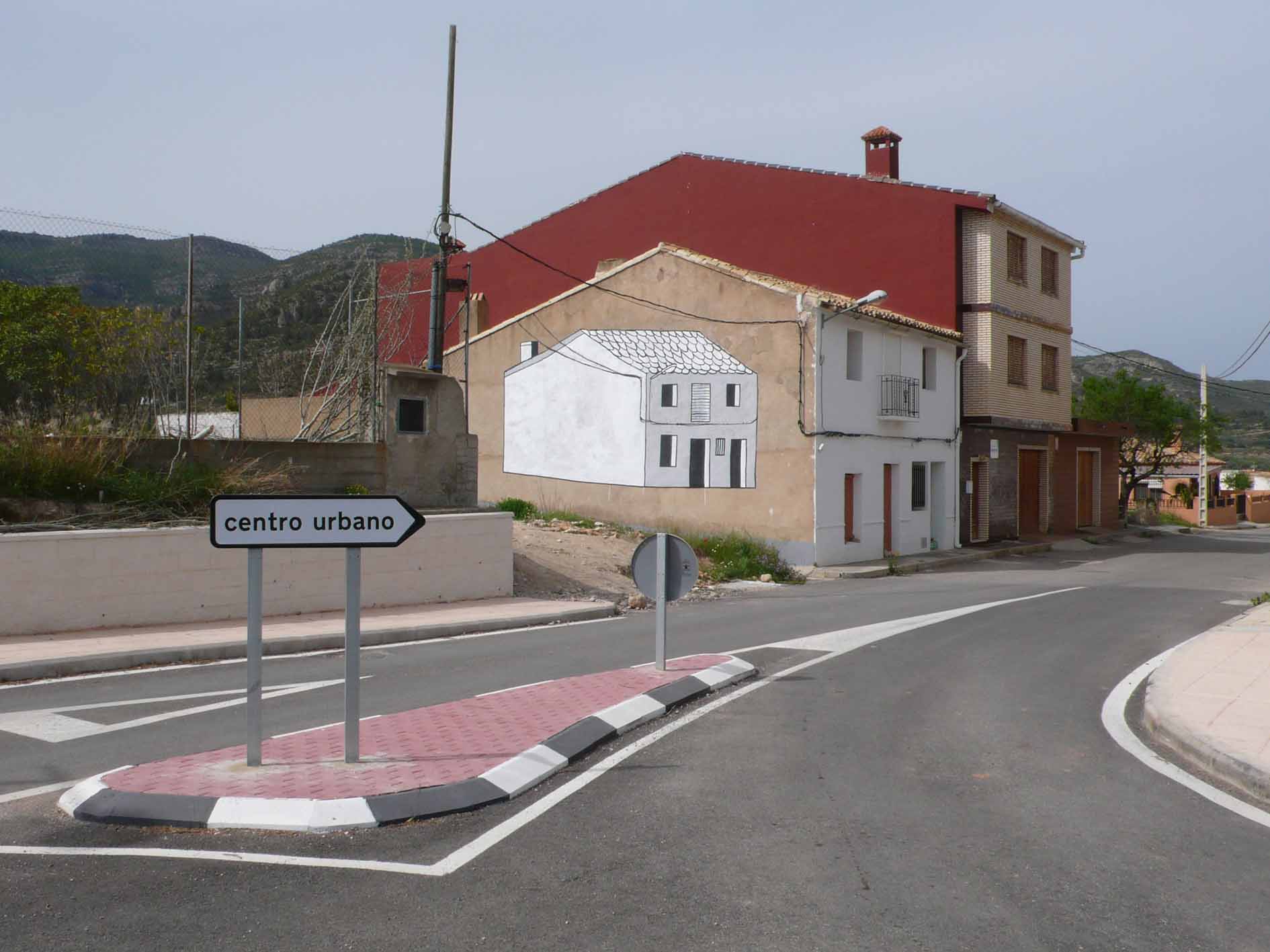
Houses on houses

Heather - this made me think about your final project idea.


Here's a link to the article. They have a link to more of the artist's work.

Tuesday, April 12, 2011

Gary Hill Documentary Response

Gary Hill had an interesting philosophy towards his work and the art that he created. I like his strobe light project with the wall and saying phrases. He creates a materiality feeling with the flashes of light. It sort of brings them to life. He also makes a physical connection between body and the wall. In a sense, the language is 'illuminated' when the strobe light flashed. Some of his other projects were a little out there and I didn't like them that much. I wasn't a fan of the nonsense themed projects. I didn't feel the bathroom floor and nude setting was appropriate for the concept in my opinion. I did appreciate that he took time for himself and went surfing. It turned out to be inspiring to him, which I liked.

Pixel Video

I came across this video and I thought it was really interesting. I enjoy the graphics and how they pixelate the world. Enjoy!

Thursday, April 7, 2011

Knife and Chair Post

In each of these videos, there is conveyed a certain emotion or vibe. For example, in the knife video, as the light changes and passes from a red hue to a greenish blue one, the mood of the picture turns from one of a cooled sense of content or relaxation to a sense of tension or suspense when the red is introduced. The mood in the chair piece is one of a weightless nature. As the feathers are falling, there is the feeling of weightlessness in the feathers an then a feeling of solidity in the chair. As the video continues, there is a sense of overwhelming as the feathers collect. I believe each piece showed an interesting emotion, whether we choose to recognize it or not. Also, I feel as if the chair is experiencing a moment in time that is unique or part of a spectacle, since it is not usual that feathers are falling from the sky. In this way, I believe the chair plays a characteristic role and the people are acting around it. I enjoyed these two videos...

The Chair & The Knife

Both videos were shot in similar ways. They shot the object in a straight on angle with limited camera techniques. the objects are being affected in some way yet are not moving. In the Chair, the multi-colored feathers are lightly falling on the chair creating a myriad of colors in the colorless chair. The viewers are merely watching the action happening and not actually involved in it in any way. The knife is similar where it is being affected by the light. The light is so vibrant and poignant reflecting off the metal. It is really interesting to see the light creep on the knife in an almost menacing way. These videos are good examples of limited space in order to depict movement and action.

time as medium

I really enjoyed reading this article because it combines science and art, especially video art. This article, for me explains what the title of class really means. The introduction into modernist art and the need for artists to find their own unique perspective and exploring it demonstrates that video art has followed that path and has become something entirely on its own. The ability to construct space through time is something I understood after reading Bruce Nauman's Corridor Installation, and Einstein's time-space system made me think about film scientifically.

Time as Medium

The thought of a psychological existence instead of a physical material being used as a medium for art is a truly intriguing concept/practice.  I thought a particularly interesting piece was Dan Graham's Present Continuous Past(s).    His ability to show you past/present/future while questioning reality is an increadable skill and thought conveyed.  I thought this was a good article to introduce the constructed space project.

the knife and the chair

The knife immediately opens with a knife and stays with that composition for a while. I started thinking that the artist wanted me to use the knife to kill someone or have violent thoughts with it, weird. By adding the colored light it reassured that thought. I wasn't too intrigued with either of the films especially the chair. I think this piece failed to make what ever subject or concept they wanted to share interesting. It was centered and static, maybe if it was shot at a more ambiguous angle then it would add some level of interest.

The Knife & The Chair

In the first video, the knife, the camera has a nearly direct view of a single knife on a blue background which periodically reflects different color lights. 

The second video, the chair, was a simple head on shot of a chair which has pieces of different colored paper gracefully dropped upon it and the surrounding areas in the shot.

Both of these videos deal with a single ordinary object sitting in the center of the frame while different colors flow throughout the scene.  This boring and simple ritual left me generally uninterested and brought no thoughts or discussions to my mind.

Time as Medium Post

I thought that this article was particularly interesting, given the chance to actually experience one of these pieces. The piece that I have experienced is Bruce Nauman's Corridor Installations in Dia: Beacon. In participating in these pieces, you get a sense of time in the present (as in what is happening around you or in the piece at the moment) and past (what has already occured). I really enjoyed the idea that the delay of video feed is past even though it is recording of just a few seconds beforehand. Also, I believe that the idea of an object viewing itself is interesting in that there is a sense of disbelief in the idea. If the object were able to think, would it see itself and believe that it was a copy of the image or that the image is an imposter or a copy of itself. I believe the object would question it's reality in relation to the image, but have a physical sense of self by being in existence. I think this questions the idea of reality versus cinematography, which we have previously discussed, which is why I found this interesting.

The Knife and The Chair

I found several similarities in these two works, but I favored The Knife more at first. Perhaps it's because I was less aware of what was actually taking place, and how the effects were actually being made were much intriguing than that of The Chair. Also, the knife itself was a more intriguing object at first viewing the video. The object in both works appeared to be suspended in a negative space, kind of floating. However, the feathers in The Chair made the object's figure ground relationship more able to establish.This led to more ideas of what the possible meanings behind the video were, and provoked stronger feeling which elevated to the same fondness I had for the Knife. I also liked the comparison of darkness with bright colors in both works. While both works came across as simply playful and experimental at first, I found them to be much more clever and curious the longer I watched.

Time as Medium

At first, I found "Time as Medium" to be pretty complicated and wasn't sure what to make of it. What brought the main point to focus for me was actually the most obvious, the title of the article. London begins the article by discussing Clement Greenberg's ideas on video as an art form and how he analyzes Modernism. He states that modernist artist must search and determine what aspect is unique to their discipline. Video artist in that sense are modernist because "They focused on the effects peculiar and exclusive to video", which apparently, and most certainly, are almost always related time.
London discusses several scientific elements dealing with time, but does point out that this isn't really the main concern for video artists in making their work. Still, one cannot ignore the fact that video has the strong capability of interchanging these scientific ideas more than any other art form. London gives examples of video art that make the viewer question the way we perceive time, suddenly causes the viewer to be more aware of the present, and causes the viewer to contemplate their on existence in time and space.

Time as Medium and the Jack Goldstein Films

Time as Medium
Barbara London begins her analysis of the critical theme of time in video art by solidifying the importance (or possibly the irrelevance) of its scientific understanding (or, misunderstanding). At the forefront of the scientific perspective is Einstein's Theory of Relativity, which finds that time is only meaningful relative to space, both of which are infinite when linked to one another. In my view, this statement follows the perception that for every possible action, there are several different reactions occurring in responsive spheres of time. Einstein also calls upon the existence of multiple spaces within a single space, which I felt supported William James' claim of the continuum of time being made out of merely smaller segments of time- individual moments that react to one another the way every piece of wood on a hanging bridge might react to each conscious step. Again, there is talk about the "now-ness" of video art and the opportunity of live or delayed feed to play on the viewer's meager understanding of time. Under the belief that "time is an illusion" Paik was able to convince his audience through his work, TV Buddha, that space can be isolated, thus breaking its link to time. The work is time-less. Above all, I appreciated the German phrase related to memory as it was introduced to illustrate the lack of understanding we have of the concept of time: "ist geschehen"/"is happened", suggesting a simultaneous pull and push between past and present.

The Knife
Goldstein's The Knife shifts the viewer through a continuum of emotions by influencing their association of the object to the color of the light projected on its reflective surface. It's almost magical, the simple play of the light on the knife and how it seems to grow from inside of it; this raises an interesting dialogue about the properties of reflection and light which directly references the medium of video, the final product being seen on the screen in this case. Though, it should be noted that the video will not be able to project the reflective property of the object, which results in this almost "magic-like" effect with the colored light. To elaborate, since it is inevitable that when we see the knife on the screen we have an innate belief that the knife is located in the present, we also assume that the rules of reflection still apply, which is not the case. Goldstein seems to play on this fallacy of thought.


The Chair
This work seemed to have a strong understanding on the visual play of background and foreground. The brightly colored feathers are able to cue the traces of the object within the space by falling behind, in front of, and on the chair. In this way, Goldstein is creating a unique focus on depth within the screen so that it almost feels live; the darkness encapsulates the viewer and the feathers float within arm's reach. The viewer does not question the scene, rather it becomes a meditative and visually embracing scene.

Time as Medium response

Although this article was hard to follow at times, I found the idea of video art's main medium, time, to be interesting. Rarely used as a medium in other areas of art, video art and especially video installations can reveal time to the viewer or the artist can make up and warp their own sense of time and impose it on to the viewer. I also found it interesting how artists such as Dan Graham also manipulate and create space along with time in his installation Present Continuous Past(s). I love how he plays with reflections along with presenting the participant with what is the past and what is the present. I believe the nature of video art is perfect for using the medium of time and space after reading this article.

Time as Medium response

I thought it was interesting to see how artists have different approaches to using time as a medium in video art. The article opens up by discussing Clement Greenberg's evaluation of Modernism requires "each discipline must search for and determine what is unique and irreducible to that art." In this way, video art using time as medium practices this Modernist viewpoint through the inherent qualities of video as a recorded representation of space and time - one that can be experienced both through the present and past.

I found Dan Graham's Present Continuous Past(s) reflective of this. Because of the placement of the monitor in the mirrored room, the piece forces the viewer to focus upon the actual space as opposed to their own image reflected. In the work, time is repeated again and again through the mirrors constant reflection and the viewer retains a heightened awareness of the space they are in.

Bill Viola's Decay Time was also interesting to me because of its reliance upon the viewers interaction and memory. By isolating a specific event and quick, Viola forces the viewer to rely upon or create their own perception of time and space.

Jack Goldstein Film response

In both of Jack Goldstein's The Knife and The Chair, the objects being filmed are mostly defined by the light, both blending into the background (the chair more so than the knife) constructing a contained space.

The Knife was interesting to me because it reminded me of those horrible loading bars on flash websites that lack immediacy. For me the light slowly being reflected on the knife created tension and a slow passage of time in space with no sense of depth. The instance when the "bluish" light started to reflect I had actually thought that there was no light being reflected because it blended in with the background really well. The knife remains static, light is the only thing that creates a passage of time.

The Chair functioned in a similar way, except for in this film The Chair was not given movement through light, but the light defined form. The chair appears really shiny, almost like its coated in tar or wet paint. Movement is seen through the accumulation of paper/feather like material falling upon it, demonstrating a passage of time in a seemingly boundless space lacking depth.

Goldsteins The Knife and The Chair Response

I felt that both pieces spoke to our upcoming project in that they were both situated in a very controlled space in which time was depicted by the movement within the frame. In The Knife time was conveyed by the light moving across the metallic surface of the knife; the continuous motion almost made time lapse back into itself as there is no other indication of time within the space constructed. In The Chair the passage of time was created by the falling feathers which is much like The Knife in that the repetitive motion almost made time stand still in the controlled space but the progression or build up of the feathers upon the chair and ground is a strong indicator of the time that has passed.

Wednesday, April 6, 2011

The Knife and The Chair

Overall, I did not care too much for these two pieces by Jack Goldstein. For The Knife, I thought it was cool how the knife changed colors so smoothly and reflected the colors so vibrantly. As for The Chair, the falling feathers seemed to take forever and I was expecting a lot to fall at the end of the piece in a giant heap. I did notice the feathers stick to the chair's surface at strange angles and almost became apart of the chair. Both of his pieces seem quite long but they also make the viewer aware of time and space, almost warping time. Due to the minimalistic and monotonous nature, it allows the viewer to do some self-reflection.

Jack Goldstein's Knife and Chair

In light of the reading and the new project coming up, I watched these two videos with the concept of time in mind. In both, the chair and knife are static objects. You do not really know how much time is passing. The video could be sped up slightly or slowed down. In The Knife, a light is shown onto the object, slowly overtaking its metallic surface (red, green, red, blue, yellow). Once the color fills the object, it stays there for a moment and then quickly retreats. The light is the only indication of something occurring within this obscure time frame. In The Chair, various colored feathers/leaves are dropped onto the scene (just a chair resting in the center of a room) at about 3 second increments. Once again, the object is passive. Forcing are being forced upon it, altering it in its physical appearance. I think that both of these pieces has something to do with time and space--how they interconnect--as well as the obscurity of time in such a scene (blocked off from natural light; uncertainty as to whether or not the video has been tampered with to make time move differently). Very nice, simple contemplative pieces.

Time as Medium

I enjoyed this reading. I am really interested in the concept of time and space--the discussion about Einstein's theory of relativity brought to mind Alan Lightman's novel Einstein's Dreams. In this book, Lightman describes a series of dreams that Einstein could have had while coming up with this theory. Each chapter describes a different world/city where time and space relate to each other differently (like in one world, everything is on wheels--buildings and all--so that they are constantly moving; in another world, time in non-linear; etc.). From this reading, I was really interested in Graham's Present Continuous Past(s). I like the idea of the present instant, and trying to capture that along with the past. As William James posed, "Where is it, this present." It is constantly turning into the past. Time is an all-encompassing factor on our lives that consumes our thoughts. It is interesting to consider it as an illusion; something in existence only because we created it.

Tuesday, April 5, 2011

Jack Goldstein's Video's

The first video, called The Knife, was a still shot of a silver knife with a dark blue background. The light source was from the light. Gradually colored light would appear across the knife and then quickly disappear. It does this several times with different colors (red, green, blue, yellow). I have been trying to contemplate the meaning behind this piece and can't really think of anything. I am guessing this is an example for our final project (constructed space). The mood I get from it is anxious. You get this slow build up and then you wait for it to quickly go away. The anticipation grows each scene.

The second video, called The Chair, is a still shot of a gold-sh colored chair, barely visible in the dark background and shadows. The light source is small and highlights the upper part of the chair. For 7 minutes, colored feathers slowly fall one or two at a time (almost 80 fall). The mood/message I get from this video is solemn and serene. The feathers could represent thoughts falling or possibly an ending to a day. I'm not quite sure though...

Time as Medium

This article explores a brief history about the use of video and time as a medium for art. I liked the concept of video recording what is seen on television and distorting in various ways, such as using a magnet to warp the images. Bruce Nauman's Corridor Installation is quite fascinating to me. The idea that you can't simultaneously view yourself on the screen is intelligent and must have been frustrating for the viewers. As I kept reading, I realized that most of the video's written about used some form of reflection, either through, mirrors, televisions. They also relied a lot on space for their projects to be successful. I think these two concepts are especially important. They are very thought provoking to the self and personal issues.

Time as Medium

This article on time was very confusing to me at first. It took e quite a while to wrap my head around the idea of time. Time is a concept that is always around us it was difficult for me to critically think about it. Because of this I found it very interesting that the author mentioned the debates about the sense of time and differing opinions on weather duration could be divided up, or it was a constant conciseness.
Thinking about video art in terms of time has become much easier for me since taking this class and I found the explanations of the art works the most helpful in illustrating the relationship between time and video. All the videos seemed to show a disconnect between vision and time. This seems to make sense because of the nature of visual arts and the nature of video art using time so heavily. All of the works, "Corridor Installation," "TV Buddha," "Present Continuous Past(s)," and "Decay Time," seemed to point out a disconnect between vision and time. They seem to make time become another sense. They also make a very strong case in having the viewer, or more correctly the participant, become aware of the now, the present moment.